
Why us
Evidence, not guesswork.
Decision-grade underwater documentation for assets where getting it wrong isn't an option — trusted by accident investigators, defence ministries and national environmental authorities since 1995.
Most firms can buy an ROV, a sonar and cameras. Few can deliver a measurable, reproducible 3D model of a complex object at 80–180 metres depth, in dark Baltic water, that an authority will base decisions on. That is the difference between a video recording and a record.
It's why the Swedish Accident Investigation Authority, the UK Ministry of Defence and the Swedish Agency for Marine and Water Management have hired us for work where the result has to hold. We bring the same method to quays, bridge foundations and port structures — the same problem class, the same demand that measurement error simply cannot exist.
— Why Ocean Discovery
Four reasons that actually set us apart.
-
Trusted where it counts
M/S Estonia for the Swedish Accident Investigation Authority. HMS Cassandra for the UK Ministry of Defence. 19 wrecks for the Swedish Agency for Marine and Water Management — the basis for remediations that recovered over 558,000 litres of oil. References no regional competitor can show.
-
Method, not hardware
Our edge is 30 years of method development — from the rediscovery of Mars Makalös to today. Reproducible results, documented QA, and a workflow that holds where visibility is zero and depth punishes mistakes.
-
We come to you — fast
Otto, our trailerable survey vessel, mobilises across the EU within days. We fit the same sensor rig to anything from an 18-foot open boat to a large survey vessel — and we don't wait on a charter window.
-
Own resources, the whole chain
Our own vessel, intervention-class ROV (Ocean Modules M500), side scan sonar and multibeam under one roof. No subcontractor chain between you and the data — that means schedule certainty and control over quality.
— What you get
A digital twin — not a pile of video clips.
The deliverable is a geo-referenced, measurable 3D model — point clouds, orthophotos and 3D model — that you navigate, measure in and base decisions on. Not raw material to interpret yourself.
On the hazardous wrecks, JD-Contractor used our digital twin live: drilling and remediation equipment was positioned against our point cloud at 60–180 metres depth. That's a digital twin in operational use — not a picture on a screen.
— Three missions
The proof carries the concept.
Different clients, different challenges — the same photogrammetric method.
-
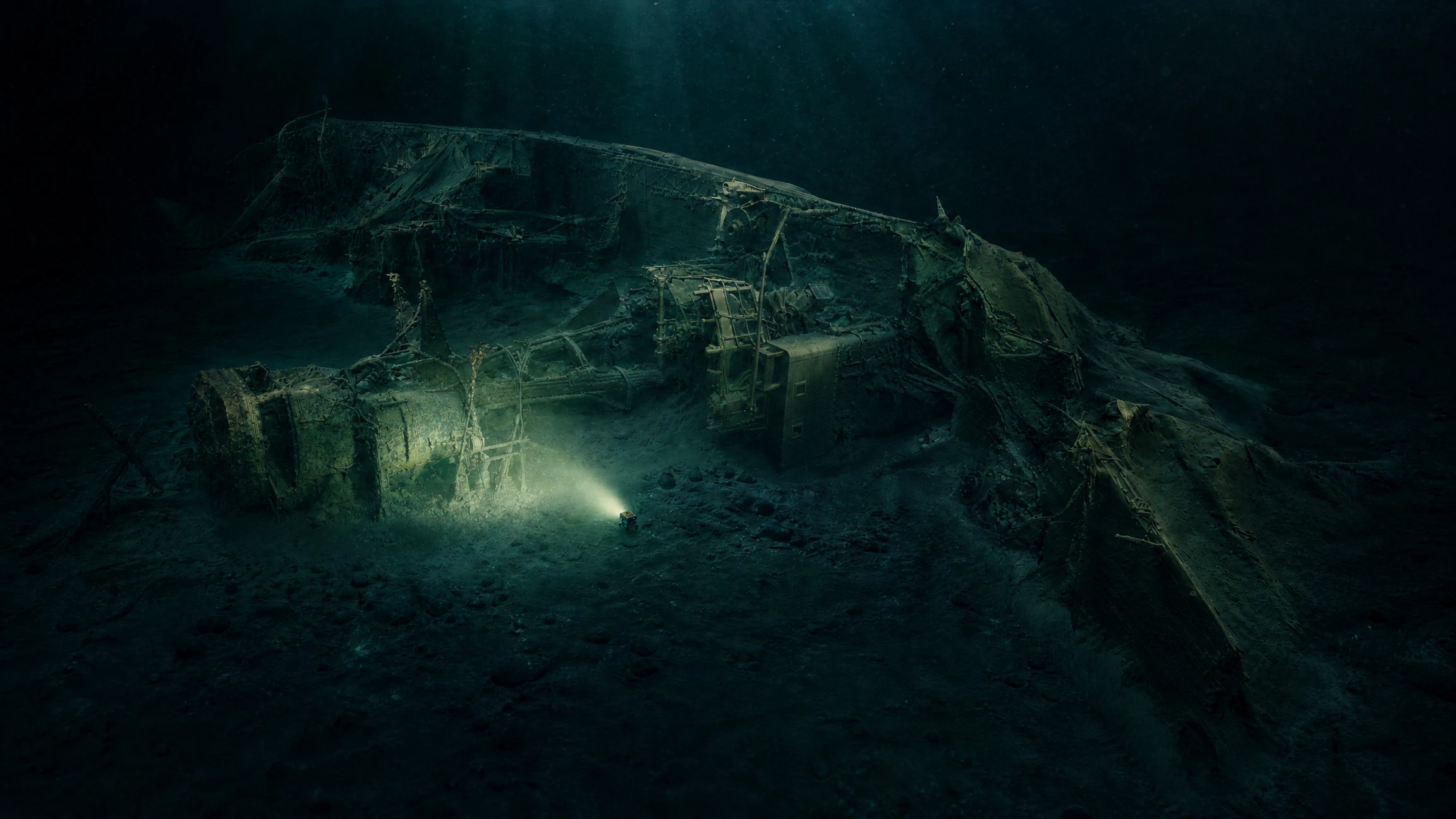
HMS Cassandra
A leaking war wreck mapped in forensic detail for the UK MOD, 2025.
Read the mission → -
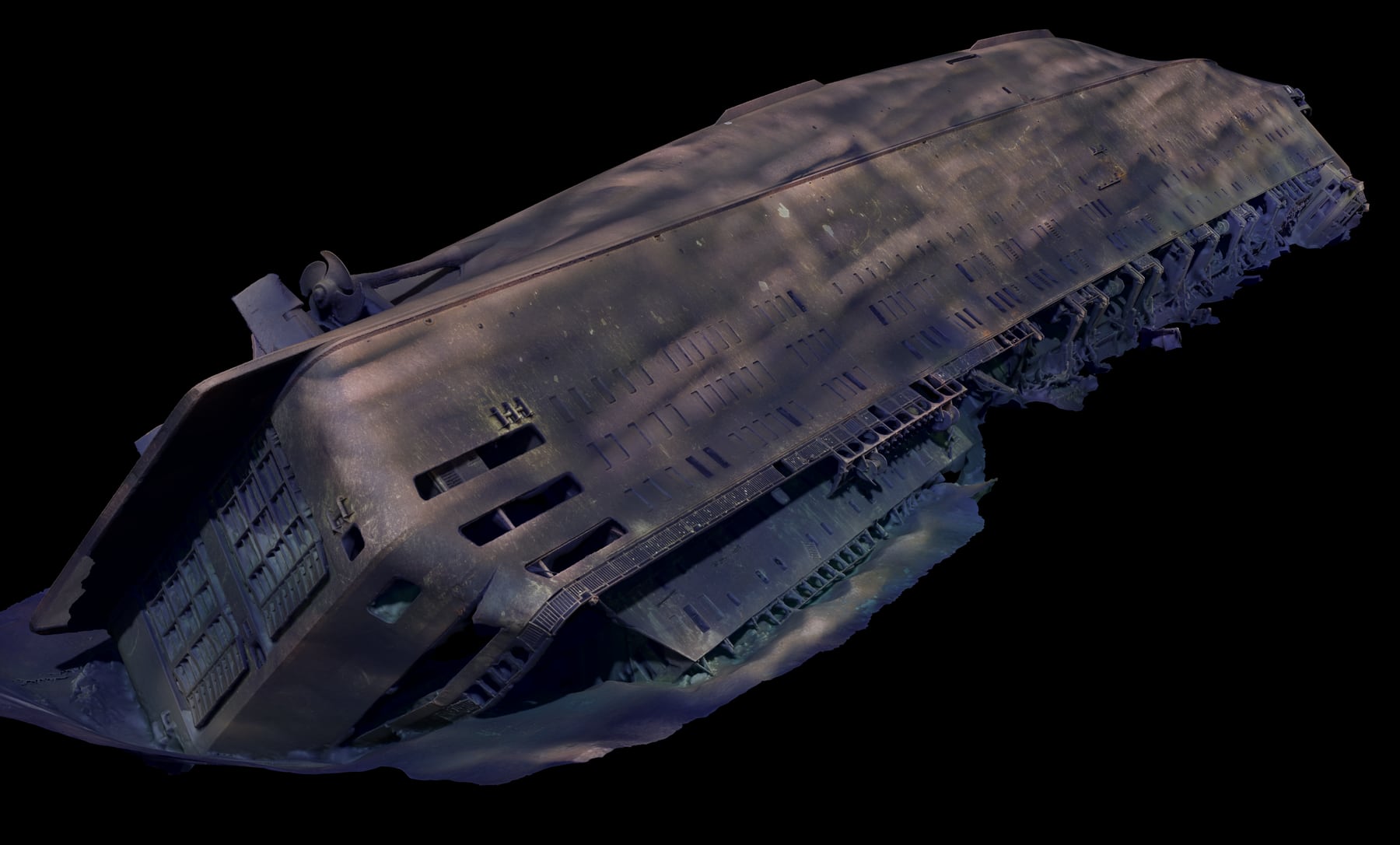
M/S Estonia
Photogrammetric documentation for the Swedish Accident Investigation Authority, 2022.
Read the mission → -
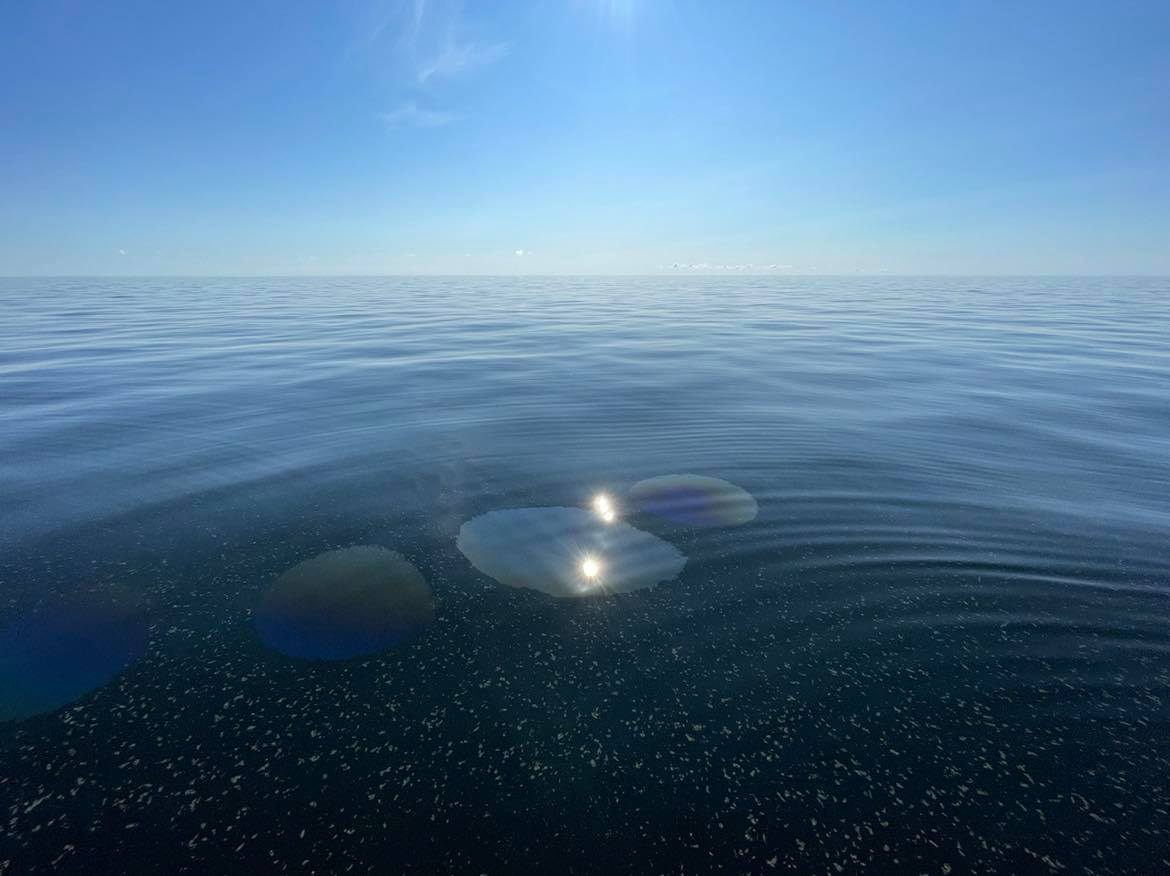
Hazardous Wrecks
19 wrecks documented for HaV — basis for remediations that recovered over 558,000 litres of oil.
Read the mission →
— Public-sector record
A vetted, publicly procured supplier.
Our public-sector assignments are won through competitive procurement. Listed here with case numbers (diarienummer) — public and verifiable with each authority.
| Authority | Assignment | Year | Ref. no. |
|---|---|---|---|
| Swedish Agency for Marine and Water Management | Bremsund | 2018 | Dnr 298-18 |
| Swedish Agency for Marine and Water Management | Immen, Lindesnäs, Malmi et al. | 2018–19 | Dnr 2928-18 |
| Swedish Agency for Marine and Water Management | Skytteren | 2020 | Dnr 384-20 |
| Swedish Agency for Marine and Water Management | Harburg, Mundogas, Nynäs I | 2021 | Dnr 357-21 |
| Swedish Accident Investigation Authority | Photogrammetry survey of M/S Estonia | 2022 | SHK 2022 |
| Region Halland | Lost fishing gear — sustainable handling and salvage | 2024 | RREU19 |
| Swedish Agency for Marine and Water Management | Karlskrona: Bruin, Magdalene, Molund, Östanhav | 2024 | HaV 2024-001405 |
| As subcontractor | |||
| Swedish Agency for Marine and Water Management | Florida et al. — via JD-Contractor | 2025 | HaV 2025-001417 |
| UK Ministry of Defence | HMS Cassandra — via Waves Group | 2025 | — |
— Mobilisation
Our platform travels to the job.
The big players depend on dedicated DP vessels and long, expensive mobilisations. That's their cost structure — and their weakness on small, coastal and urgent jobs.
Otto is trailerable and mobilises across the EU within days. If the job needs a smaller platform we fit the rig to an 18-foot open boat; if it needs more capacity we scale up to a survey vessel. You don't wait on a charter window — you get schedule certainty.
The same intervention-class ROV (Ocean Modules M500) works just as readily from our 18-foot work boat as from Otto — or from a large chartered survey vessel like VOS Sweet, which we used on M/S Estonia. That's the flexibility: we choose the platform to suit the job, not the other way round.
-
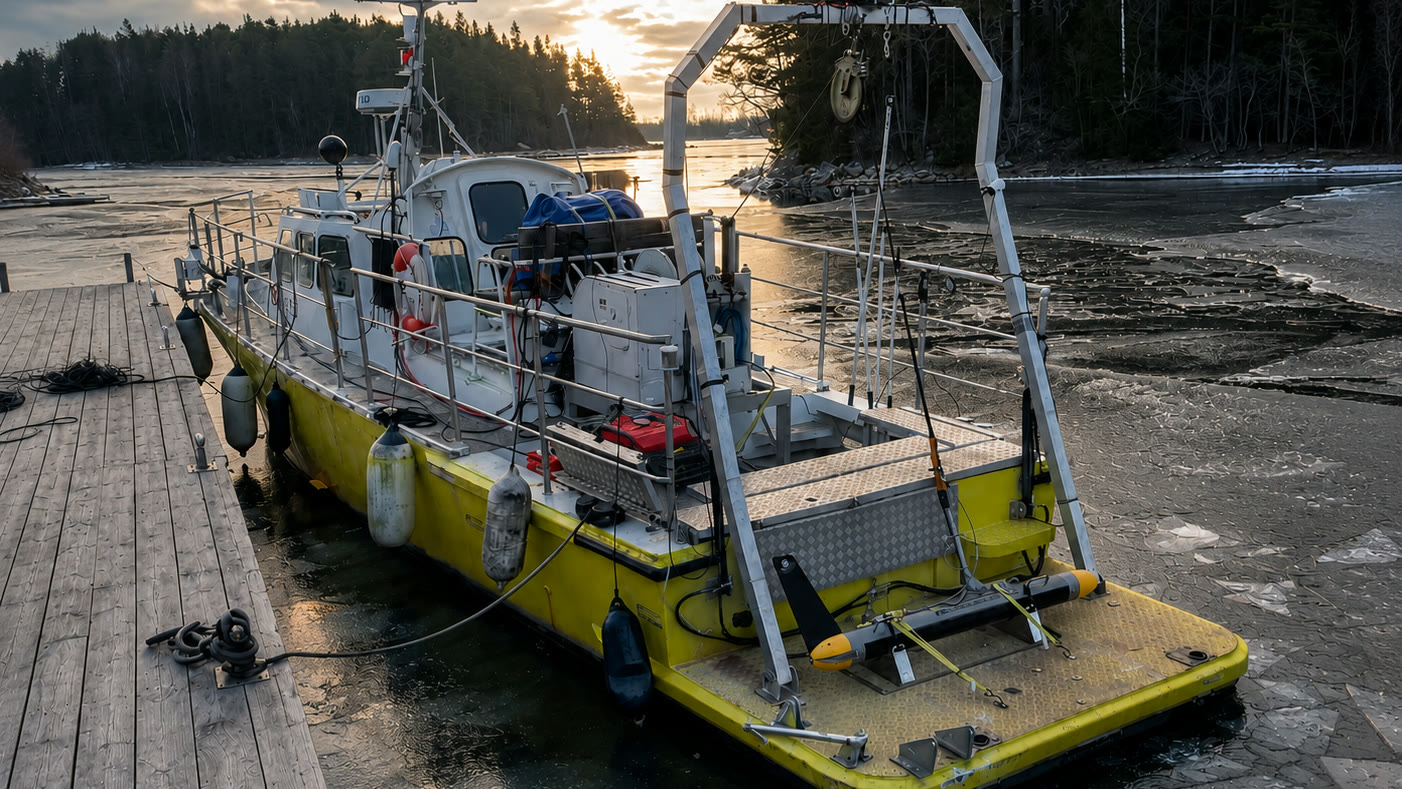
Otto — our survey vessel. We mobilise in any environment, even in ice. -
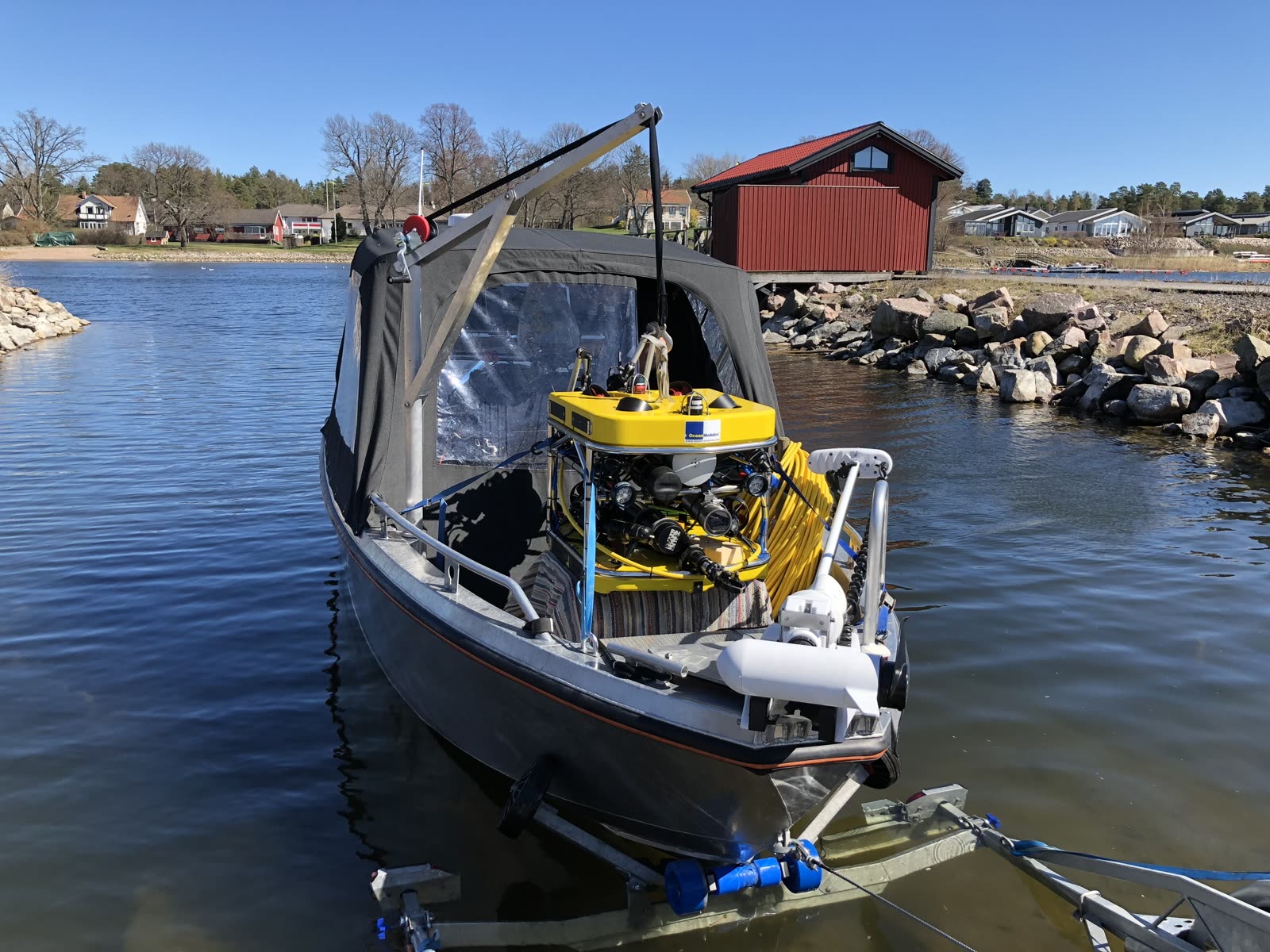
The same ROV as on M/S Estonia — here on our 18-foot work boat. -
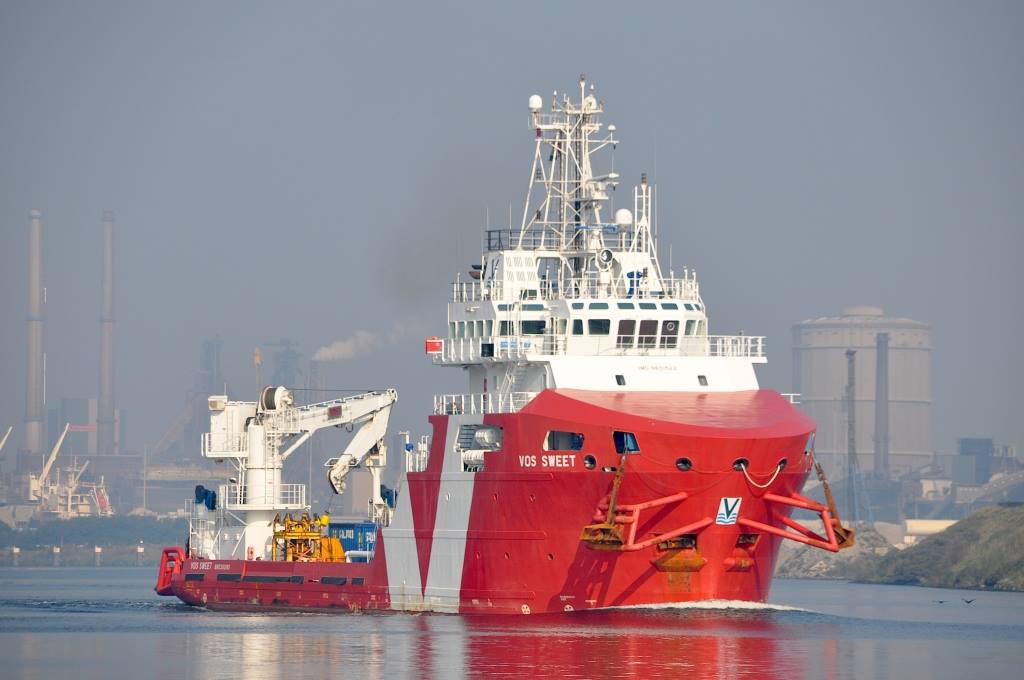
VOS Sweet — the large survey vessel we chartered for M/S Estonia. From 18-footer to offshore vessel. -
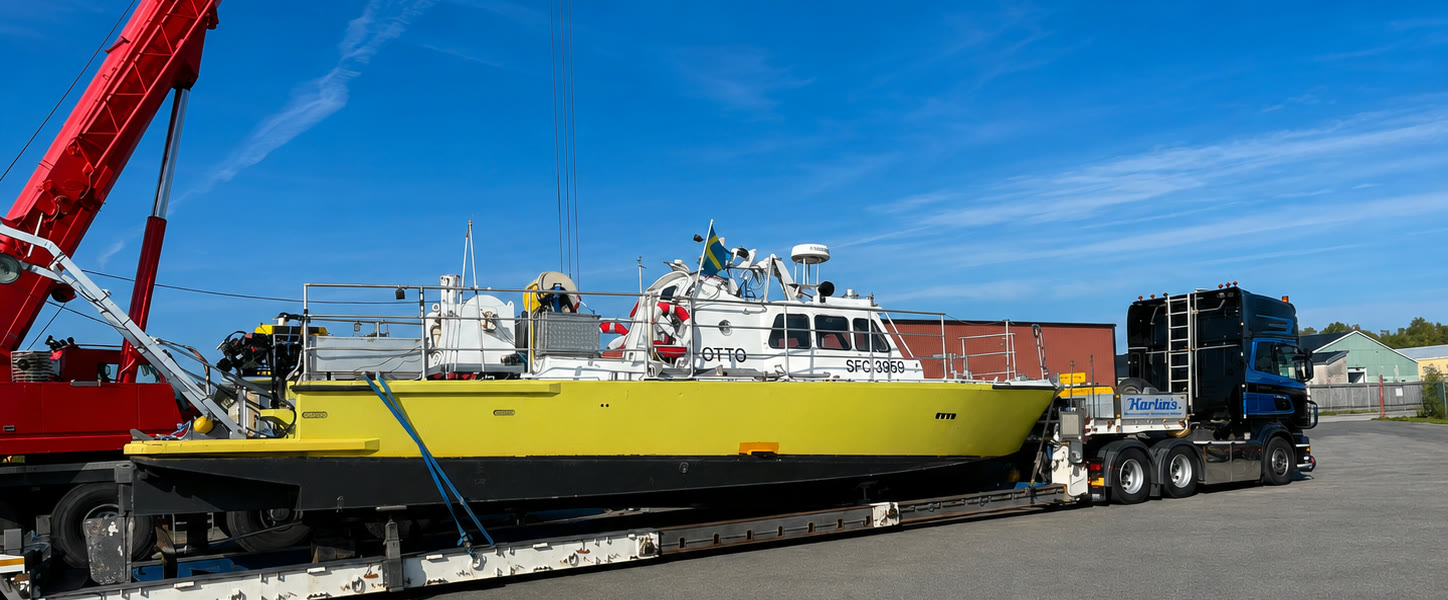
On its low-loader trailer — shipped anywhere in the EU.
— Next step
Discuss an assignment.
Describe the site, environment and output you need — we'll come back with a proposal on method, mobilisation and timeline.
Contact us